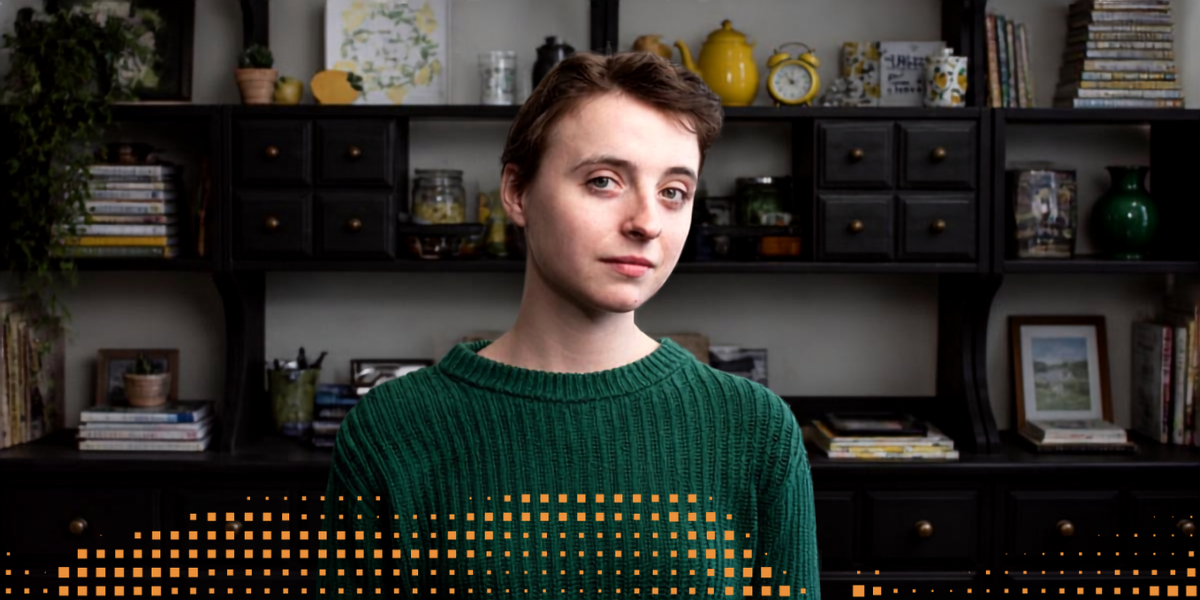
At 21, Sidney Ritchie was used to helping other people through surgery. As a surgical technologist at University of Michigan Health, she had spent some time working in operating rooms. Then, in May 2024, an MRI for tingling and numbness ended with a call telling her to go straight to the emergency room. Within days, Sidney underwent brain surgery, remaining awake for part of the procedure so doctors could protect critical functions while removing as much of the tumor as possible.
Coming through surgery brought relief, but another shock followed. Sidney learned she had diffuse midline glioma, or DMG, an aggressive pediatric brain tumor with few treatment options. She and her family had to weigh clinical trials quickly, while still processing everything that had happened.
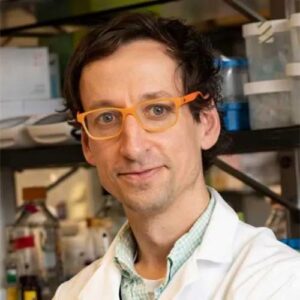
Carl Koschmann, MD
Clinical Scientific Director
University of Michigan
Carl Koschmann, MD, Sidney’s neuro-oncologist at C.S. Mott Children’s Hospital and clinical scientific director of the U-M Chad Carr Pediatric Brain Tumor Center, helped guide those decisions. He also brought years of work with the Children’s Brain Tumor Network (CBTN), where he previously served as Scientific Co-Chair and a Board Member.
Because of where Sidney’s tumor had grown, surgeons were able to remove more tissue than is usually possible with DMG. With her consent, tissue that was not needed for diagnosis could be used for research, including an approach developed through the CBTN lab to grow patient-derived tumoroids: living models made from a patient’s own tumor.
For Sidney, saying yes was easy. When Koschmann suggested she take some time to think about donating tissue for research, she remembers answering, “No, give me the papers. I will sign them today.”
Growing a living model of Sidney’s tumor
Tumoroids give researchers a closer look at how a tumor behaves outside the body. Traditional lab models often focus only on cancer cells, but tumors also live alongside brain cells and other supporting cells that can affect how they grow and respond to treatment.
Patient-derived tumoroids keep more of that natural environment together. Researchers prepare donated tumor tissue and grow it in conditions that help different cell types stay alive. Over time, the tissue can form a three-dimensional model that keeps important features of the original tumor. Tumoroids often grow much more quickly than other preclinical models.
For Sidney’s tumor, researchers used nutrient-rich liquid and a gently rocking incubator to help the tissue grow. Over several weeks, the samples developed into tumoroids the team could study and use to test possible treatments.
When Sidney heard that her tumoroid had grown successfully, she wanted to see it. “It just looked like cells,” she recalled with a laugh. What interested her was what those cells could reveal about her tumor and what researchers might learn from them.
That curiosity is part of how Sidney advocates for herself. She jokes that she is “a little bit of a control freak,” but understanding what was happening in her body gave her a way to stay involved when so much felt outside her control.
Research alongside care
Once Sidney’s tumoroids were growing well, Koschmann’s team tested several drugs to realistically consider during treatment.
Sidney could not wait for those results before starting care. She chose among clinical trial options and began treatment before the lab testing was complete.
A few weeks later, the results came back. Sidney’s tumoroids showed strong sensitivity to the drug she was already receiving and less sensitivity to another option her team had considered.
The testing did not choose Sidney’s treatment; it was research findings rather than a clinical test. But they gave Sidney, her family, and her care team another piece of information after a difficult decision. As treatment became harder physically, the findings offered added confidence in the path they had already chosen.
With more study and clinical testing, tumoroids could one day help scientists better understand how individual tumors respond to treatment while care is still underway. Sidney’s case offers an early example of research moving alongside care, without overstating what the technology can do today.
What shared science makes possible
Sidney’s tumoroid was grown and studied at the University of Michigan, and the method behind it came through collaboration with CBTN.
Koschmann’s team used a tumoroid protocol developed in the CBTN lab by Lab Director Mateusz Koptyra, PhD, and colleagues. The CBTN lab has worked on ways to grow, preserve, and bank patient-derived tumor models so they can be shared with researchers. At Michigan, Koschmann’s team applied that knowledge to fresh tissue while Sidney’s treatment was happening.
In this case, knowledge moved through the network. Another team could use and adapt a method developed through CBTN to answer a different research question.
That is a core part of how CBTN works. The network connects institutions around shared data, tumor tissue, research models, and expertise. For rare pediatric brain tumors, where no single hospital sees enough patients to answer every question alone, that sharing gives researchers more ways to learn.
Making one sample matter beyond one moment
Sidney’s willingness to contribute tissue came from experience and instinct. Through her work as a surgical technologist, much of it with women’s health and gynecology teams, she had already seen how donated tissue and research could change what doctors were able to offer patients.
Becoming a patient made that idea personal. Sidney knew research on her tumor might not help her directly, but the chance that it could help someone else was enough.
Koschmann sees that same motivation in many families. “Almost without exception, families will choose to participate,” he said. “It really helps them to know that their child’s story is helping the next generation, that we’re going to learn something from it.”
Sidney’s experience makes that process visible. Tissue from one surgery became a living model of her tumor. A method shared through CBTN helped researchers grow and study it. The testing added information to her care while also building knowledge about a rare and aggressive pediatric brain tumor.
No single sample can answer every question, and no single institution can solve pediatric brain tumors alone. But when patients contribute, and researchers share the data, tissue, tools, and knowledge that come from those contributions, one sample can help open the door to more discoveries.
That is the work CBTN was built to connect.
Explore CBTN’s research platforms and the data, biospecimens and resources available to advance pediatric brain tumor research.
Explore CBTN research platforms →
Sidney Ritchie’s diagnosis and care journey were originally featured by Michigan Medicine and the Rogel Cancer Center in the June 2025 story, “Brain cancer patient finds a way forward.”